

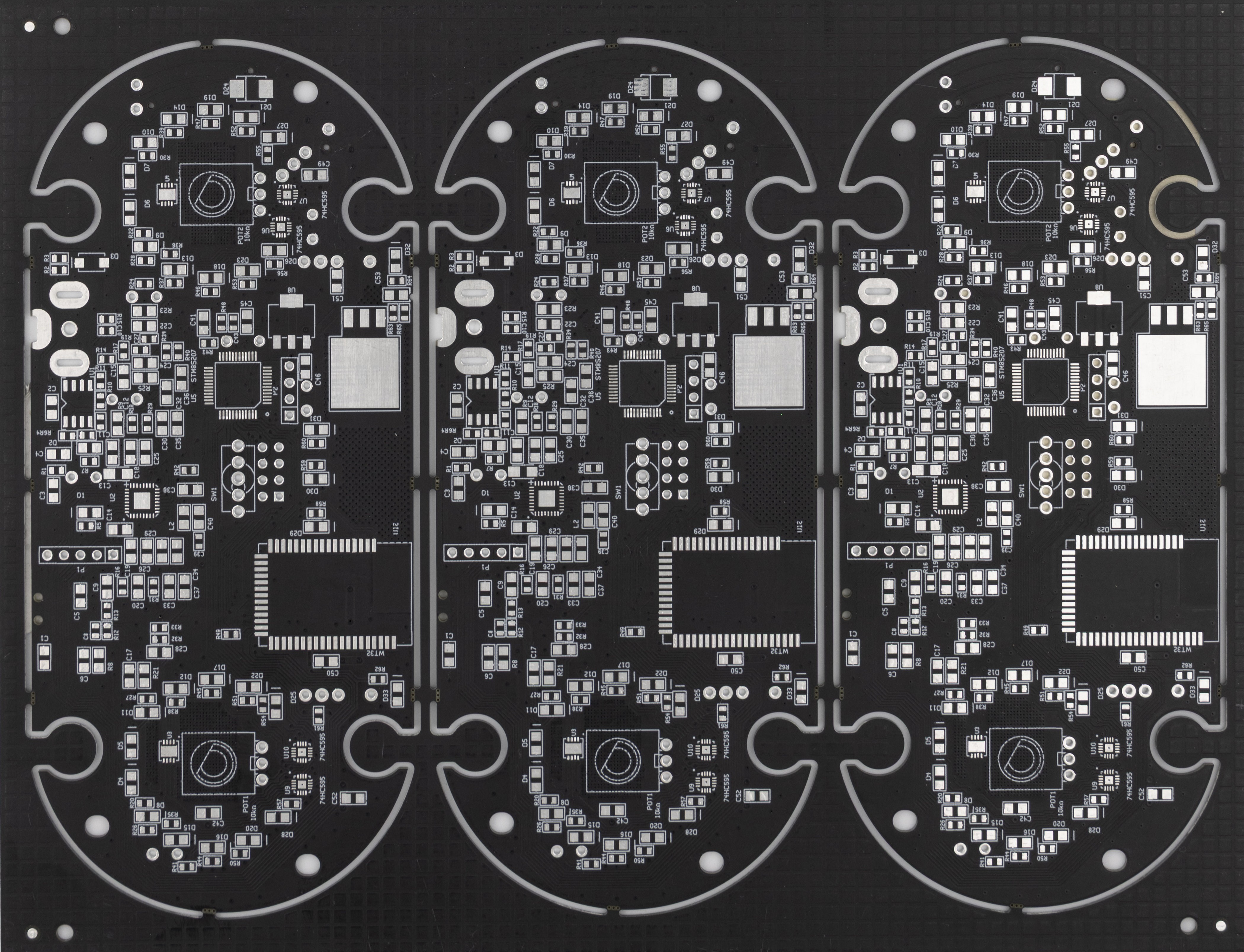
Multilayer Printed Circuit Boards: Complex Circuits for Maximum Performance
Multilayer printed circuit boards (also known as multilayer PCBs) are an essential component of the modern electronics industry and consist of multiple electrically conductive and insulating layers. Unlike single- or double-sided PCBs, which have only one or two copper layers, multilayer PCBs contain three or more conductive copper layers that are bonded together in a solid composite. In this process, the conductive copper layers are electrically separated from one another by insulating layers (e.g., FR4 cores and prepregs).
The structure of a multilayer printed circuit board varies depending on the application’s requirements. The complexity of the overall circuit and the available space determine the number of copper layers required. The individual circuits on the copper layers are specifically connected to one another using so-called vias (plated holes through all layers), blind vias (from outer to inner layers), and buried vias (inner layers only). The trend is increasingly moving toward miniaturization, which in turn means that multilayer printed circuit boards are in ever-greater demand.